
After more than thirty years in construction, I’ve noticed a pattern.
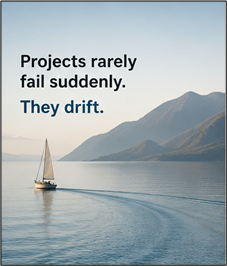
Projects rarely fail suddenly.
They drift.
Somewhere along the way, production slips. A subcontractor falls behind. Crews don’t arrive when they should. Planned work quietly gets deferred. Nothing feels urgent because each change is small.
Schedule updates show only minor movement.
Cost reports still look acceptable.
Pay applications get approved.
So, owners leave meetings believing the project is still on track.
The Wrong Question
Then, months later, every owner asks the same question:
“What happened?”
That is the wrong question. A better question is:
“What did we fail to notice?”
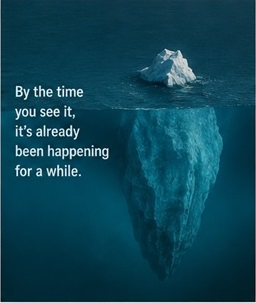
In my experience, the warning signs were almost always there. We simply weren’t looking for them the right way.
Looking Beyond Individual Reports
Most project reporting tells us what has already happened.
- Schedule updates tell us where we planned to be.
- Pay applications tell us what has been billed.
- Cost reports tell us what we’ve spent.
They’re valuable tools, but they’re largely lagging indicators. They tell us where the project has been—not where it’s going.
Meanwhile, decisions determining whether a project finishes successfully are being made today.
Owners don’t lose sleep over reports. They lose sleep over surprises.
Over the years, I found myself looking less at individual reports and more at the relationships between them.
- Does production support the reported schedule progress?
- Does manpower support the remaining work?
- Does the rate of completed work support the promised completion date?
- Is the reported production rate sustainable?
- Does today’s production make tomorrow’s schedule believable?
When those relationships begin to diverge, something important is happening.
Each individual report may still appear reasonable.
Together, they begin telling the real story.
Production Alignment
I kept coming back to the same idea: healthy projects stay aligned.
Production, resources, progress, and schedule, move together.
When they stop doing that, the project begins communicating that it is drifting.
I refer to that condition as Production Alignment.
Better Questions Lead to Better Decisions
It’s easy for project teams to spend months discussing budget variances, debating schedule logic, and arguing over delays, while overlooking the more important question:
Is the project producing work at a rate that can realistically achieve its objectives?
If not, what are the chances it can recover?
Construction projects don’t need better explanations after the fact.
They need earlier insight—while meaningful corrective actions are still available.
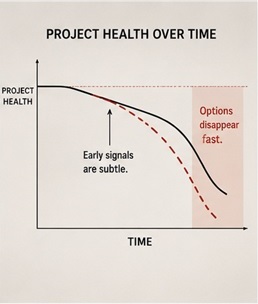
The purpose of project analytics isn’t merely to document the past.
It’s to help owners recognize project drift early enough to preserve the time needed to correct course.
Leave a Reply